Best Pillow for Neck Pain UK: What to Look For and What to Avoid
There is no single best pillow for neck pain, because the right one depends on how you sleep and how your body is built. What is consistent is the advice from the NHS: when you sleep, your head should sit level with the rest of your body, and a low, firm pillow is suggested as part of easing neck pain yourself. This guide turns that into practical steps for choosing a pillow in the UK.
Please note: this is general information, not medical advice. If your neck pain is severe, follows an injury or does not improve, speak to a GP or pharmacist.
The short answer
- Aim for your head to stay level with your spine, not tipped up or sagging down.
- For most people with neck pain that means a lower, firmer pillow, which is what the NHS suggests for self-help.
- Side sleepers usually need more height than back sleepers to fill the gap between ear and shoulder.
- Avoid sleeping on your front, which twists the neck, and avoid stacking several pillows.
- A pillow supports good positioning. It is not a treatment, so see a GP if pain lasts more than a few weeks.
What the NHS says about sleeping with neck pain
The NHS guidance on neck pain and stiff neck says most neck pain clears within a few weeks, and it lists the neck becoming locked in an awkward position while sleeping among the most common causes. For sleeping, it points to:
- a low, firm pillow, as part of easing neck pain yourself
- keeping your head the same height as the rest of your body when you sleep
- a firm mattress
- not twisting your neck in bed and not sleeping on your front
It advises seeing a GP if pain or stiffness does not go away after a few weeks.
Choose pillow height by sleeping position
Height, often called loft, matters more than most people expect. Too high pushes your chin towards your chest, and too low lets your head drop.
- Back sleepers: usually a lower, supportive pillow that fills the curve of the neck without pushing the head forward. See our guide to the best pillow for back sleeping.
- Side sleepers: a fuller pillow, because your head needs lifting to stay level with your spine across the gap to the shoulder. See the best pillow for side sleeping.
- Front sleepers: the hardest position for the neck, because your head is turned to one side. If you cannot change, a thin, soft pillow is usually the least bad option. See pillows for stomach sleepers.
- Combination sleepers: you need a pillow that still works when you roll over. See pillows for combination sleepers.
Firmness and filling
Firmness is about how far the pillow sinks under your head. A pillow that sinks too much loses its height by morning, which is why firmer pillows are often suggested for neck pain. Fillings feel different from one another:
- Feather and down: soft and mouldable, and they can be plumped up but tend to compress overnight. See our feather vs down guide.
- Hollowfibre and microfibre: springy and light, usually medium or medium-soft. See hollowfibre vs microfibre.
- Memory foam: contoured and often firmer. Read our memory foam pillow guide.
- Box-edge pillows: a side panel gives a fuller, flatter-topped feel. See our guide to box-edge pillows.
Always check the height and firmness on the product page rather than relying on a name alone.
Are orthopaedic pillows better for neck pain?
Shaped pillows, often sold as orthopaedic or contour pillows, are popular for neck pain, and some people find them helpful. There is no single standard for the term, though, so judge a pillow on its height, firmness and shape rather than its label. Our guide to orthopaedic pillows in the UK explains the main types.
Neck pain and headaches
Tight neck muscles can go hand in hand with tension-type headaches, and some people notice both after a poor night on the wrong pillow. A pillow cannot treat headaches. If you get a new headache together with nausea, dizziness, blackouts or changes in your vision, get medical advice urgently rather than changing your pillow.
Common mistakes
- Keeping an old pillow that has gone flat. See when to replace your pillow or try our free replacement checker.
- Stacking several pillows. Some NHS trust guidance suggests avoiding more than two under your head.
- Choosing by price or label rather than height and firmness.
- Expecting a fix overnight. It can take a few nights to adjust to a different pillow.
- Ignoring the mattress, since the NHS recommends a firm one.
A simple way to check your pillow height
Ask someone to photograph you lying in your usual position, or prop up your phone to film. As a rough guide, your head should look level with your spine. On your side, your nose should be roughly in line with the centre of your chest. On your back, your chin should not tuck down towards your chest.
Before you buy
Measure your pillowcases with our pillow size matcher so the new pillow fits. Check the returns policy as well. Ours covers unused items in their original packaging for 30 days, so it pays to choose carefully. If you would like help narrowing it down, try the Pillow Finder quiz.
When to see a doctor
- Neck pain or stiffness that does not go away after a few weeks.
- Pins and needles, numbness or a cold arm.
- Pain that began after a fall or accident.
- You are worried about it. In many areas you can refer yourself to NHS physiotherapy without seeing a GP.
Seek urgent help if you lose control of your bladder or bowels, or have a new headache with nausea, dizziness or vision changes. After a serious fall or road accident, call 111 or seek emergency care.
Neck pain pillow FAQs
What height pillow is best for neck pain?
There is no single height. The aim is a level head and neck: usually lower for back sleepers and fuller for side sleepers. The NHS suggests a low, firm pillow as part of self-help.
Is a firm pillow better for neck pain?
The NHS suggests a low, firm pillow when easing neck pain yourself. A pillow that is too firm or too high can still tilt your head, so choose one that keeps your neck in line with your spine.
Can the wrong pillow cause neck pain?
An awkward position while sleeping is one of the most common causes of neck pain listed by the NHS, and your pillow is a big part of that position.
Should I sleep without a pillow?
Some people do, usually on their back. It does not suit everyone, especially side sleepers. See our guide to sleeping without a pillow.
Ready to compare? Take the Pillow Finder quiz or browse our pillows.
Pillows from our range to compare
Names, prices and descriptions come straight from each product page. Not sure which suits you? Try the Pillow Finder.
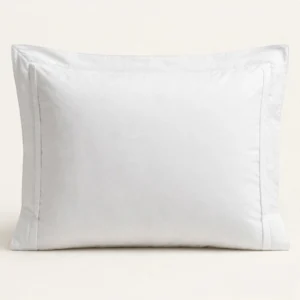
Box-edge Pillow
£21.99
A structured box-edge pillow with a side gusset for a fuller, medium-firm feel, ideal for side sleepers who need extra support.
View pillow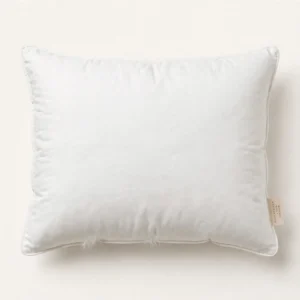
Duck Feather Pillow
£29.99
A natural duck feather pillow with medium support that moulds to your head and neck. Regular plumping helps keep it lofty.
View pillow
Hollowfibre Pillow
£12.99
A practical hollowfibre pillow with medium support. Lightweight, affordable and easy to care for, for everyday sleeping.
View pillow
Plain Pillow
£14.99
A classic plain white pillow in a standard UK size, with medium support that suits most back and side sleepers. A simple, versatile everyday pillow.
View pillow