Why Does My Pillow Smell? Causes, Fixes and When to Replace It
If you have ever pressed your face into a pillow and thought, why does my pillow smell?, you are not alone. Pillows spend eight hours a night close to your face, hair and skin, and they soak up more than most of us realise. A stale or musty smell is common, usually fixable, and occasionally a sign that it is time to say goodbye.
This guide explains the most common causes of pillow smells, how to tell them apart, what to do about a new pillow that smells when it arrives, how to freshen a pillow safely, and when to replace it. It also covers the habits that stop smells coming back.
Quick diagnosis: what does it smell like?
The type of smell often points to the cause, and the cause decides the fix.
- Sweaty, stale or “sleepy”: usually body moisture and oils building up in the filling and cover. Often fixable by airing and washing.
- Damp, musty or mildew-like: suggests moisture that has not dried out, perhaps after washing or in a humid room. Needs careful drying, and may mean replacement if it does not clear.
- Faint natural or “farmyard” smell on a new feather or down pillow: common with natural fillings. Usually fades with airing.
- Plasticky or “new packaging” smell on a new synthetic pillow: often fades after a short airing.
- Smoke, cooking or perfume: the pillow has absorbed odours from the room or from products used near it.
- Sour or rancid: usually built-up oils, sweat or product residue that has been there a long time. Often a sign the pillow is past its best.
Common causes of pillow smells
Sweat, skin oils and saliva
Even if you do not feel that you sweat much at night, your head gives off moisture and oils, and some of it passes through the pillowcase into the pillow. Over weeks and months, that builds up. It is also the main reason pillows turn yellow, which we cover in why do pillows turn yellow. Yellowing and smell often arrive together.
Hair and skin products
Hair oils, styling products, night creams and fragranced skin care can all transfer onto bedding. They may smell pleasant at first, but they build up and can turn stale as they age.
Pillowcases and protectors that are not washed often enough
A pillowcase is the first line of defence. If it is washed infrequently, everything it has absorbed passes through to the pillow. A zipped protector adds a second layer which is easier to wash than the pillow itself. Our guide to pillow protectors and pillowcase sizes explains how to choose one.
Trapped moisture
Moisture is the key ingredient in most bad smells. If a pillow has not dried properly after washing, or if the bedroom is damp, poorly ventilated or has condensation problems, the filling can hold moisture and begin to smell musty. A pillow that feels dry on the outside can still be damp in the middle.
Odours from the room
Pillows absorb smells from the air, including cigarette smoke, cooking, pets and strong air fresheners. Fabrics and soft fillings hold on to odours, which is why a pillow can smell even if it is clean.
Age
Every pillow has a lifespan. Over time, oils and moisture work into the filling in a way that washing cannot completely reverse. See how often to replace pillows for typical timescales.
Why a new pillow can smell
It can be alarming to unpack a brand-new pillow and notice an odour. In most cases it is normal and temporary.
- Natural fillings. Feather and down are animal products, and a new pillow can have a faint natural smell when first opened, particularly if it has been compressed in packaging. Our article comparing duck feather and goose down notes that smell can differ between the two. Airing a natural-fill pillow in a well-ventilated room or outdoors in a dry, shaded spot for a day or two often clears it. Fresh air also helps restore loft, as described in how to fluff a pillow.
- Synthetic fillings. Hollowfibre and microfibre pillows can have a mild “new product” smell after being packed. Airing them usually does the trick.
- Covers. Some new fabrics carry a faint odour from manufacture or storage, which usually fades with airing and washing the cover or pillowcase.
If a smell is strong, unpleasant, or does not fade after airing and a few nights’ use, check the care label and contact the supplier. We are happy to help if you bought from us: get in touch, and see our returns page for the details.
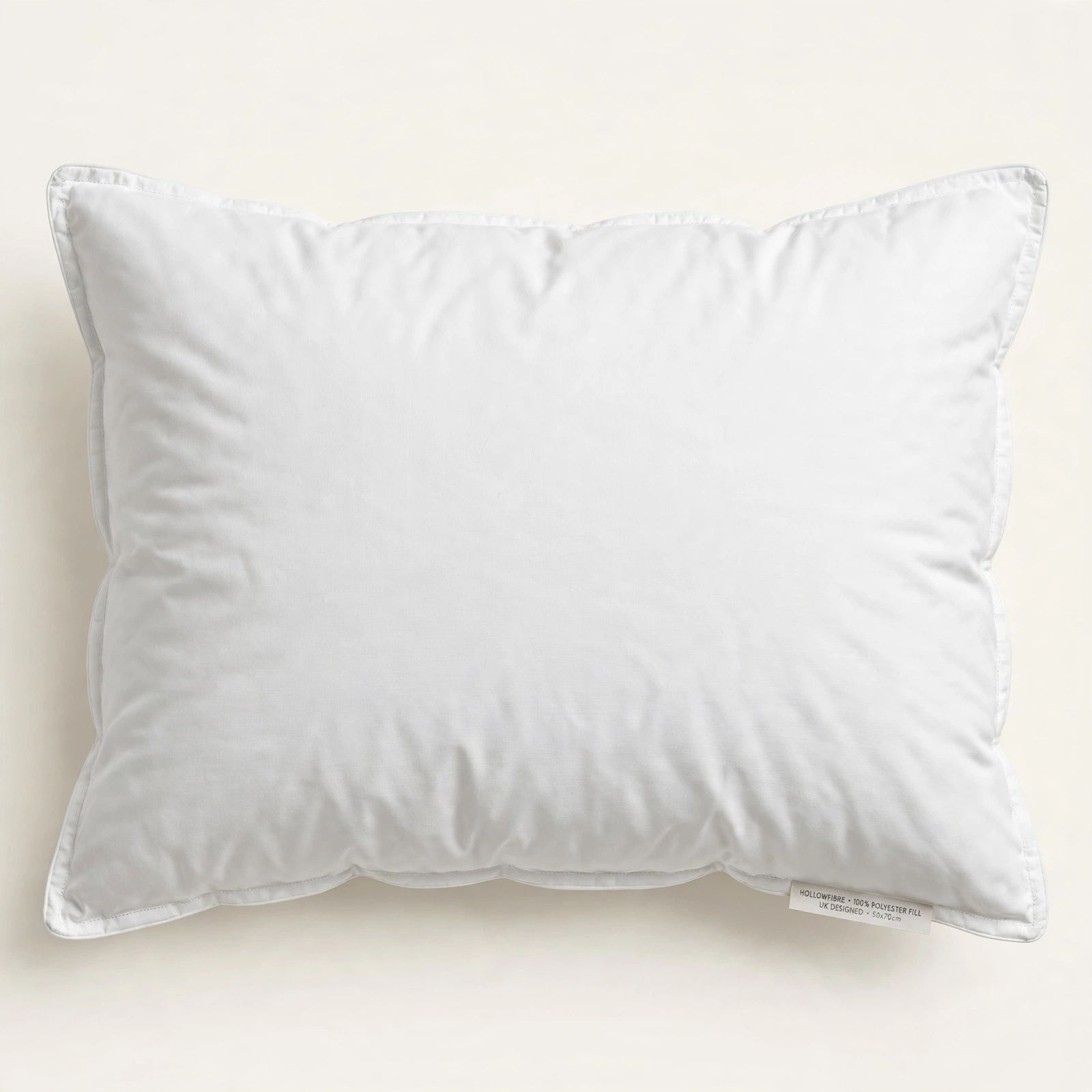
How to freshen a smelly pillow
Work through these steps from the gentlest to the most thorough. Always begin by checking the care label, because what is safe for one pillow can damage another.
- Strip it back. Remove the pillowcase and any protector and wash them first. Sometimes the case is the main culprit.
- Air it. On a dry day, put the pillow outdoors or in a draughty room, ideally out of strong direct sunlight, for several hours. Turn it over halfway. Airing alone often clears a mild stale smell, especially in natural fillings.
- Shake and plump. Moving the filling around lets air into the centre.
- Wash it if the label allows. Many synthetic pillows can be machine washed, and some natural-fill pillows can too, but follow the label to the letter. Our guide on how to wash pillows takes you through temperature, detergent and loading.
- Dry it thoroughly. This is the step people most often get wrong. A pillow that goes back on the bed damp will smell worse than before. Dry it fully, breaking up the filling as you go, and leave it for longer than you think necessary.
- Re-air before use. Give it a final airing to let any remaining moisture and detergent smell disperse.
The Pillow Care Guide summarises the main care rules for each filling in one place. If your pillow cannot be washed, regular airing and a washable protector become even more important.
Some people also sprinkle a light layer of bicarbonate of soda over the surface, leave it for a while and vacuum it off. It is a popular household tip rather than a tested method, so test a small area first and do not use it on fabrics that could be damaged.
What not to do
- Do not rely on sprays to cover up a smell. Fragranced sprays mask odours rather than removing them, can build up in the fabric, and may irritate sensitive skin or noses when used close to your face.
- Do not use too much detergent. Excess detergent can stay in the filling, leaving a smell and a stiff feel. Rinse well.
- Do not dry on high heat unless the label allows it. Heat can damage fibres and covers, and can leave a burnt or scorched smell.
- Do not put a pillow back on the bed while damp. It is the fastest route to a musty smell.
- Do not try to “wash out” mould. If you can see black, green or grey spots, or the smell is strongly musty and returns after washing, the pillow should be replaced, particularly if anyone in the household has allergies, asthma or sensitive skin.
Keeping smells away
- Wash pillowcases regularly. Most people change them with their bedding, and some prefer to do so more often in warm weather or if they sweat heavily.
- Use a protector. It keeps sweat, oils and spills away from the filling and is much easier to wash than the pillow itself.
- Do not go to bed with wet hair. It adds moisture that goes straight into the pillow.
- Let the bed air. Pull back the covers when you get up and open a window if you can, so the moisture can escape before the bed is made.
- Ventilate the room. Damp, stuffy bedrooms make smell problems worse. Keep the room reasonably ventilated, particularly in cold weather when windows stay shut.
- Rotate and plump pillows. Regular movement keeps air in the filling and spreads wear.
- Clean the pillow on a sensible schedule. The right frequency depends on the filling and the care label.
If you are choosing a pillow with ease of care in mind, look at our synthetic fill pillows, which include the Hollowfibre Pillow and Microfibre Pillow. Our product pages describe hollowfibre as generally easy to wash, with the exact care label to be confirmed with the supplier, so check the label that arrives with your pillow.
When to replace the pillow
You have given the pillow a fair chance if you have aired it, washed it as the label allows, dried it thoroughly and it still smells. It is time to replace it if:
- the smell is still there after cleaning and thorough drying;
- you can see mould, or the smell is strongly musty or sour;
- the filling is lumpy, flat or discoloured as well as smelly; or
- you have had it for a long time and it no longer holds its shape. Our guide to when to replace pillows lists the signs to check.
When you pick a replacement, think about which care routine will suit you. If you prefer something you can wash easily and often, a synthetic filling is simpler. If you like a natural feel and are happy to air and plump regularly, feather and down remain popular. Our feather vs synthetic pillows guide compares the two.
Frequently asked questions
Why does my pillow smell even after washing?
Usually because it has not dried fully inside, or because oils and residue have built up in the filling. Dry it for longer, rinse out detergent thoroughly and air it. If the smell persists after a proper wash and dry, the pillow may be at the end of its life.
Why does my new feather pillow smell?
Natural fillings can have a faint smell when new. Airing the pillow for a day or two, in a well-ventilated spot, often clears it. If the smell is strong or does not fade, contact the supplier.
Is a smelly pillow bad for you?
A stale smell on its own is mostly unpleasant rather than harmful. A damp, musty pillow with visible mould is different, and should be replaced, especially if you or someone in your home has allergies or asthma. If you are concerned about symptoms, speak to your GP or pharmacist.
Can I use fabric freshener on a pillow?
We would avoid it. Sprays mask odours rather than removing them, and fragrance sitting close to your face all night is not for everyone. Airing, washing and drying properly work better.
How often should I wash my pillow?
It depends on the filling and the care label. Many people wash washable pillows a couple of times a year, and wash pillowcases and protectors much more often. Check the label and see our washing guide for details.
Why does my pillow smell musty?
A musty smell points to moisture. Common causes are a pillow that was not dried fully after washing, a damp bedroom, or going to bed with wet hair. Air and dry the pillow thoroughly, and replace it if the smell comes back or you see mould.
The bottom line
Most pillow smells come down to moisture, oils and time. Airing, careful washing where the label allows, and thorough drying fix many of them, and a protector and regular case changes help stop the problem returning. If a pillow still smells after a proper clean, or shows signs of mould, replace it.
When you are ready for a fresh start, browse the full Pillow Store collection.
This guide is general household advice and is not medical advice. If you have concerns about allergies, asthma or skin symptoms, speak to your GP or pharmacist.
Wondering if it is time for a new one? Our free pillow replacement checker takes two minutes.