What Is Hollowfibre? A Plain-English Guide to Hollowfibre Pillows
If you have seen the word on a pillow label and wondered what hollowfibre is, you are in good company. Hollowfibre is one of the most common pillow fillings in the UK, found in everything from budget pillows to multipacks for family beds, yet it is rarely explained properly. Shops describe it as “practical” or “easy-care” and move on.
This guide explains what hollowfibre actually is, how it behaves in a pillow, how it differs from microfibre, feather and down, who it suits, how to look after it and what its limits are. We also explain where our own hollowfibre pillows fit, and where they do not.
The short answer
Hollowfibre is a synthetic pillow filling made from polyester fibres that have a hollow core. The hollow centre makes each fibre lighter than a solid one of the same size, and the fibres are usually crimped or curled so that they spring apart and trap air. The result is a lofty, light filling that is affordable and generally simple to care for.
Our product pages describe it in the same terms: a synthetic filling made from polyester fibres with a hollow core, lightweight, affordable and easy to care for. It is sometimes written as “hollow fibre”, “hollowfibre” or “hollow-fibre”, and all three refer to the same sort of filling.
How hollowfibre works
The fibres
Each strand is a short length of polyester with a tiny tube running through it. Because the centre is hollow, the fibre is lighter and can hold air. The strands are typically crimped, giving them a spring-like shape, so that they do not pack down completely. When you press on the pillow, the fibres compress; when you let go, they spring back, at least for a while.
The finish
Many synthetic fillings are given a surface treatment, sometimes a silicone-based finish, to help the fibres slide against each other and feel softer. The exact finish varies between products, and not every pillow discloses it, so check the product details if it matters to you.
The cover
The filling is only part of a pillow. The cover and the construction also affect how the pillow feels and how long it lasts. Our Hollowfibre Pillow is listed with a polyester and cotton cover and plain construction, although final specifications are confirmed with the supplier. See what is a quilted pillow and what is a box-edge pillow for how construction changes the feel.
Strengths and limits
What hollowfibre does well
- Affordable. It is one of the least expensive pillow fillings, which is why it is so common in value packs, guest rooms and family homes. See our guide to best budget pillows for how much to spend.
- Lightweight. Hollowfibre pillows are easy to lift, move and shake out.
- Easy care. Synthetic fillings are generally simpler to wash and dry than natural ones, although the care label always has the final word.
- No animal products in the filling. The filling is polyester rather than feather or down, which matters to people avoiding animal-derived materials. Check the cover and other components, too.
- Consistent. Because it is manufactured, the filling is uniform from pillow to pillow.
Where it falls short
- It can clump and flatten. The fibres can bunch together and lose their spring with use and washing. A flat, lumpy hollowfibre pillow is harder to revive than a feather one. See how to fluff a pillow.
- It feels different from natural fillings. Feather and down mould to your head and settle in a way that hollowfibre does not, and some people simply prefer that feel.
- It is typically a mid-range feel. Standard hollowfibre is often made to a medium support level, which suits many sleepers but may not be soft enough for some front sleepers or firm enough for some side sleepers.
- It has a shorter useful life than people expect. A budget pillow is often a pillow you replace more often. Check how often to replace pillows for the signs.
- It is a petroleum-derived material. Polyester is made from petrochemicals. Some products use recycled polyester, but that varies and we do not make claims about it for our own pillows.
How it compares with other fillings
Hollowfibre vs microfibre
Microfibre uses much finer fibres, which feel softer and silkier, while standard hollowfibre feels a little lighter and springier. Microfibre is often described as the more luxurious of the two. Our full comparison is in hollowfibre vs microfibre.
Hollowfibre vs duck feather
Feather pillows mould to your shape, feel more natural and can be plumped back to life, but they need more careful care and cost more. Hollowfibre is lighter, simpler to maintain and cheaper. The detail is in duck feather vs hollowfibre.
Hollowfibre vs feather and down
The difference is similar, with down adding extra softness and loft. Learn more in feather vs down pillows and the broader feather vs synthetic pillows.
Hollowfibre vs foam
Foam is a solid material rather than a loose filling, so it behaves very differently, and it cannot be fluffed or reshaped by hand. We do not currently list foam pillows. For general care of foam see memory foam pillow care.
For a side-by-side view of all the main materials, the Pillow Filling Guide is a helpful overview.
Who hollowfibre suits
Hollowfibre is a sensible choice for:
- Households that want easy care. If you would rather throw your pillows in the wash than air and plump them, synthetic fillings are simpler.
- Anyone on a budget. It delivers a comfortable pillow for a modest price.
- Guest rooms, family beds and spare pillows. It is a practical choice when you need several pillows, as we explain in pillows for a guest bedroom.
- People avoiding animal-derived fillings. The filling contains no feather or down.
- Those who like a lighter pillow. Hollowfibre is much lighter than a dense filling.
It may be less suitable if you want a pillow that moulds to your head like feather, a particularly silky feel (look at microfibre) or a very soft, low pillow for front sleeping (see best pillow for stomach sleepers).
What about allergies?
People often assume synthetic means hypoallergenic, but it is not that simple. Dust mites, rather than the filling itself, are the main bedding allergen for many people, and they can live in any pillow. We make no medical or allergy claims for our pillows. If allergies are a concern, read dust mites in pillows and are feather pillows hypoallergenic, and speak to your GP or pharmacist.
Caring for hollowfibre pillows
Care instructions differ between products, so follow the label on your pillow. In general:
- Check the care label first. It tells you whether the pillow can be machine washed, at what temperature and how it can be dried.
- Wash in a suitable cycle. Our guide to how to wash pillows sets out the steps.
- Dry thoroughly. Damp filling clumps and can smell. See why does my pillow smell for what goes wrong if it is not dried fully.
- Break up the fibres. Shake and squeeze the pillow as it dries, and plump it regularly afterwards.
- Use a protector. It keeps the filling cleaner and cuts down on washing. See pillow protectors and pillowcase sizes.
The Pillow Care Guide sets out the rules for each filling in one place.
Buying tips
- Look at the support level, not just the filling. Two hollowfibre pillows can feel quite different depending on how much filling they contain and how they are made.
- Read the care label and description. Look for washing instructions and the cover material.
- Do not expect miracles at the lowest price. Cheap pillows can be perfectly good, but they tend to wear out sooner. See best budget pillows.
- Match the pillow to your sleeping position. Start with best pillow for sleeping position, and use pillow loft explained to judge height.
- Think about quantity. If you need several pillows, a multipack is often better value than buying singly.
Hollowfibre at Pillow Store
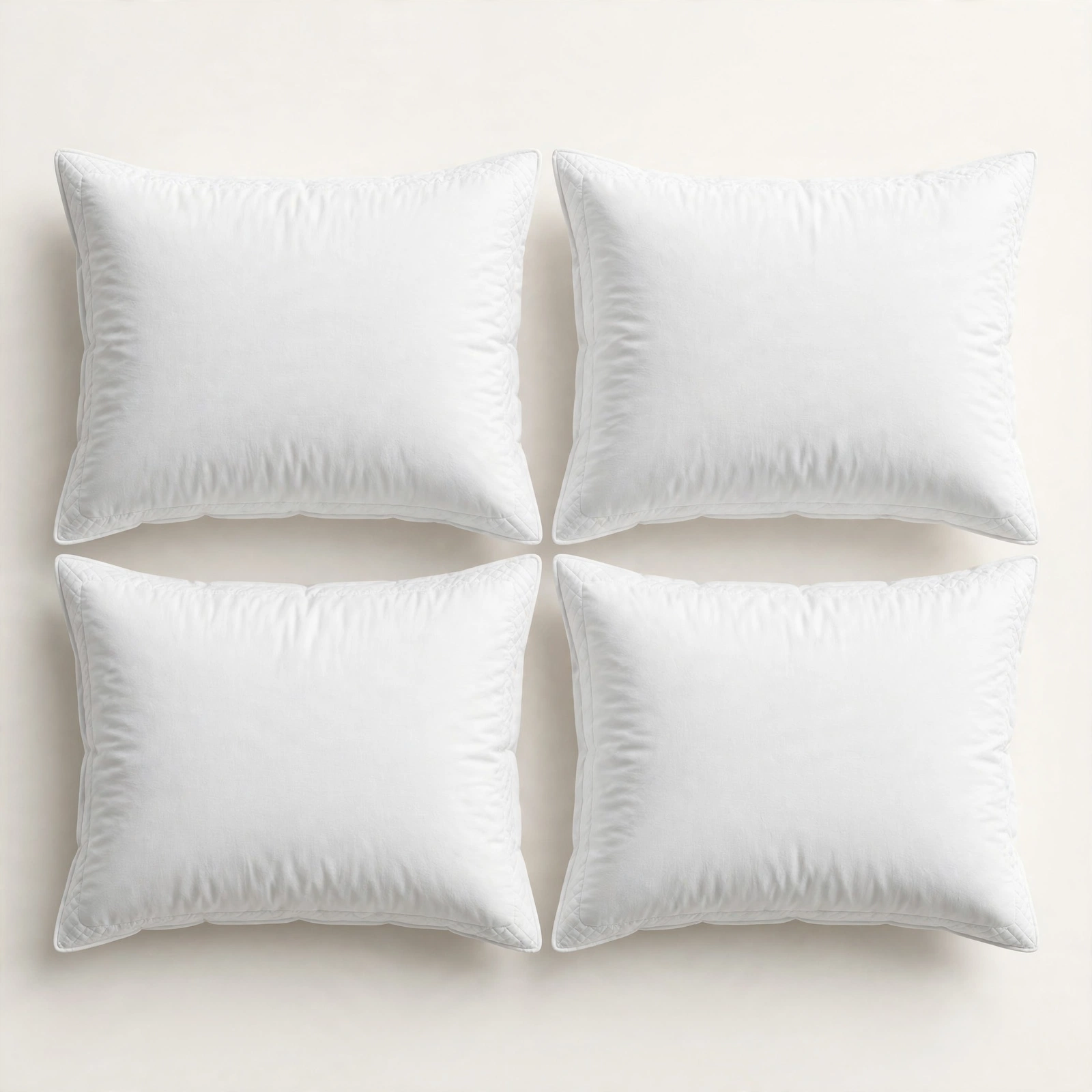
We list two hollowfibre products. The Hollowfibre Pillow is a single pillow listed with medium support in a standard UK size (48 x 74 cm). The Hollowfibre Multipack contains four identical hollowfibre pillows, which suits family beds and guest rooms. Both are listed as medium support and easy to care for. You can see them together on our hollowfibre pillows page, or compare with the rest of the synthetic fill pillows.
The details on our product pages are guide specifications, and final specifications and care labels are confirmed with the supplier before dispatch, so please check the product page for the latest information. If you would like to ask about anything before you buy, get in touch.
Frequently asked questions
Is hollowfibre the same as polyester?
Hollowfibre is a type of polyester filling. Polyester is the material, and “hollow” describes the shape of the fibre, which has a hollow core.
Is hollowfibre good for pillows?
It is a practical, affordable and easy-care filling that suits many sleepers. It is generally a medium-feel pillow and does not mould to your head like feather, so whether it is good for you depends on your preferences.
Can you wash hollowfibre pillows?
Many hollowfibre pillows can be washed, but always follow the care label on yours. Dry them fully and plump them as they dry.
How long do hollowfibre pillows last?
It depends on the quality of the pillow and how it is used and cared for. Replace it when it no longer springs back, is lumpy or no longer supports your neck. Our when to replace pillows guide covers the signs.
Is hollowfibre better than microfibre?
Neither is better in every case. Hollowfibre is lighter and springier, and microfibre is softer and silkier. Our comparison helps you choose.
Is hollowfibre vegan?
The filling is a synthetic polyester and contains no animal products. Check the rest of the pillow, such as the cover and any stitching or finishes, if you need to be certain.
Is hollowfibre hypoallergenic?
We make no allergy claims for our pillows. The filling being synthetic does not by itself make a pillow allergy-proof, because dust mites can live in any bedding. See dust mites in pillows for what helps, and speak to your GP or pharmacist about your own situation.
The bottom line
Hollowfibre is a lightweight, affordable synthetic filling made from hollow polyester fibres. It is easy to look after and works well for everyday sleeping, guest rooms and family homes. It will not feel like feather, and it will not last forever, but for many people it is a sensible, good-value choice.
Ready to look? Browse our hollowfibre pillows, or take a look at the full collection.