Can You Tumble Dry Pillows? How to Dry Every Type Safely
Washing a pillow is the easy half. Drying it is where things go wrong. A pillow that comes out of the dryer still damp in the middle will turn lumpy and start to smell, and one dried on too hot a setting can be damaged for good. So can you tumble dry pillows, and how do you do it without ruining them?
The honest answer is that it depends on what is inside. This guide covers how to tumble dry synthetic, feather and down pillows, which pillows should never go in the dryer, how to check a pillow is properly dry, and how to dry pillows without a tumble dryer, which is a real consideration in a damp UK autumn. For the washing stage, start with our guide to washing pillows.
The short answer
- Always check the care label first. If it says do not tumble dry, believe it.
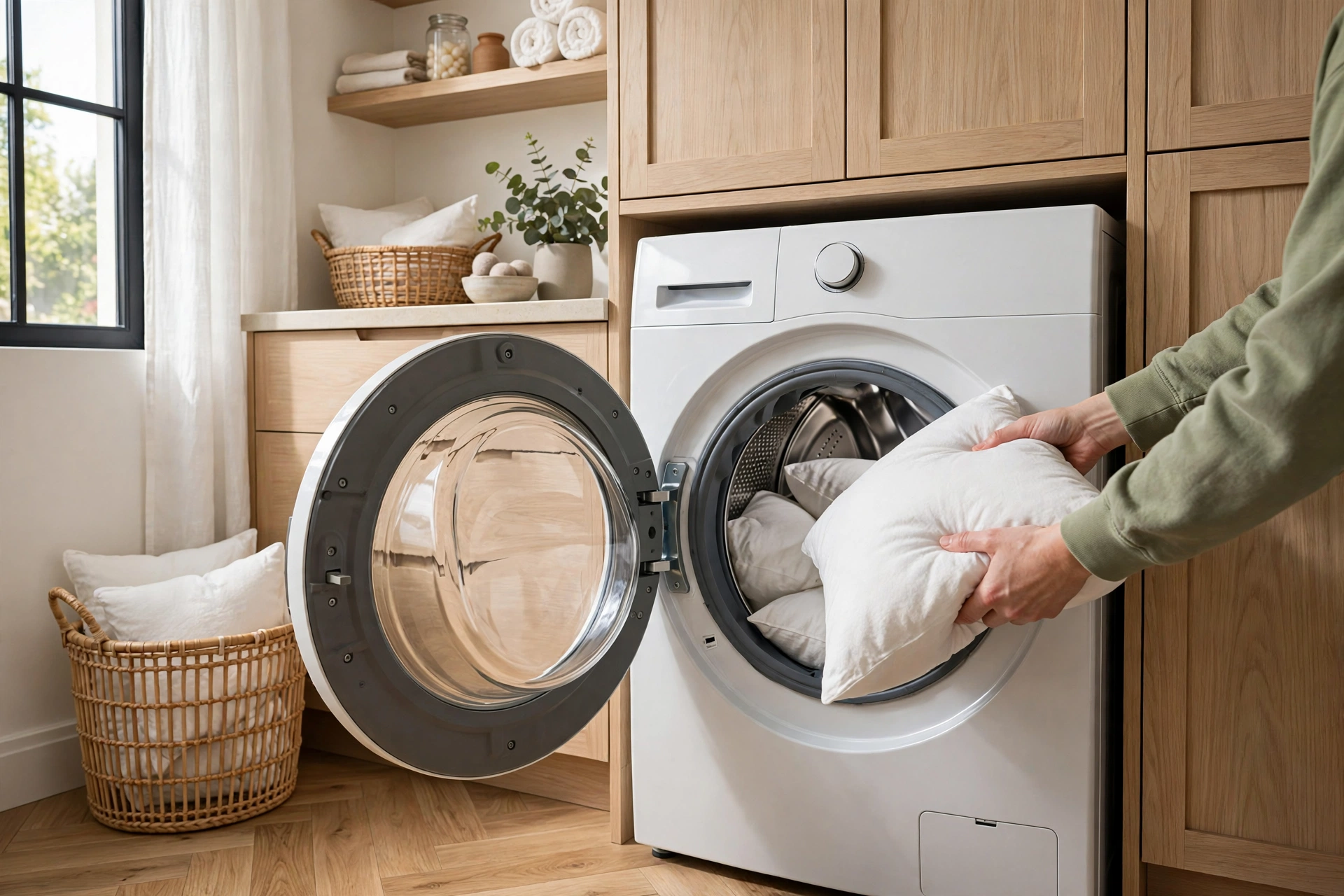
- Hollowfibre and microfibre pillows can usually be tumble dried on a low heat if the label allows.
- Feather and down pillows can sometimes be tumble dried on low, but they take much longer to dry and need regular fluffing. Some manufacturers recommend professional cleaning instead.
- Memory foam and latex pillows should not go in a tumble dryer. Heat can damage the foam.
- Whatever the filling, use a low heat, give the pillow room to tumble and make sure it is completely dry before it goes back on the bed.
Before you start
Read the care label
The label stitched into the pillow is the manufacturer’s instruction and overrides any general guide, including this one. It will say whether the pillow can be tumble dried and at what heat. If the label is missing or unreadable, treat the pillow cautiously and favour air drying or short low-heat cycles.
Check the pillow is in good condition
Look over the seams and fabric before the pillow goes into a drum. A split seam can open further in the dryer and spill filling into the machine. If you spot one, fix it first, and read feathers poking through your pillow for the basics of repairing or replacing.
Think about your dryer’s size
A pillow needs space to tumble freely. If it is jammed against the drum, it will dry unevenly and the middle may stay wet. Check your dryer’s capacity in the manual, and remember that a wet pillow is heavier than it looks. Drying two pillows together helps balance the load, as long as the combined weight is within the dryer’s limit. If the pillows are too big for your machine, a launderette with larger machines is a practical option.
Clean the filter
Empty the lint filter before each load and again afterwards. Feathers, fibre and lint reduce airflow and make the dryer work harder, and it is good dryer safety practice in any case. Avoid overloading the machine.
Tumble drying by filling
Hollowfibre and microfibre pillows
Synthetic pillows are the easiest to dry. Polyester fibres hold less water than feather and down and dry relatively quickly. If the label allows, use a low heat and check the pillow regularly, plumping it between cycles. High heat is the thing to avoid: it can damage the fibres and leave the pillow flatter. See our guides to hollowfibre and microfibre pillows for how they behave in daily use.
Feather and down pillows
Natural fills hold a lot of water and take far longer to dry. Some can be tumble dried at home on a low heat, and some manufacturers prefer professional laundering, so the label matters even more here. If you go ahead:
- use a low heat or an air-only setting;
- add dryer balls, or two clean tennis balls in clean socks, to help break up clumps;
- stop at intervals to shake and break up lumps by hand; and
- expect several cycles, and test for dampness before you stop.
Any trace of moisture left in the filling can lead to a musty smell and mildew, so it is better to over-dry than under-dry. If a hard spin or a rough dry has already damaged the cover, see our guide to quills poking through.
Memory foam and latex pillows
Do not tumble dry them. Heat can break down the foam and affect its shape, and wet foam is also very slow to dry in a closed drum. These pillows are usually cleaned by spot cleaning or a gentle hand wash and then dried flat in the air. Our guide to memory foam pillow care explains how.
Pillows with no clear label
When in doubt, air dry. If you want to use a dryer, choose the lowest heat, a short cycle and check the pillow often, stopping at the first sign of unusual smell or damage.
Step by step: how to tumble dry a pillow
- Remove excess water. After washing, press the water out gently with your hands, or use the machine’s low-spin setting. Do not wring or twist the pillow.
- Break up the clumps. While the pillow is wet, gently pull the filling apart with your fingers, particularly at the corners.
- Load it with company. Place the pillow in the dryer with dryer balls, or two clean tennis balls in clean socks. Add a second pillow to balance the load if the capacity allows.
- Select a low heat. Use the lowest heat or an air-fluff setting. Never use a high heat to speed things up.
- Use a timed cycle if the sensor stops early. Automatic sensor programmes can end while the centre of a pillow is still damp. A timed low-heat cycle gives you more control.
- Stop and shake. At regular intervals, take the pillow out, shake it, pull apart any lumps and feel for damp spots.
- Repeat until it is completely dry. Natural fills can need many cycles, and that is normal.
- Let it rest. Leave the pillow in a warm, airy room for a few hours before you put the case on, then plump it. See how to fluff a pillow.
How to tell a pillow is properly dry
A pillow can feel dry on the surface and still be wet in the middle. Before you put it back on the bed, run through these checks:
- Squeeze the centre and the corners. Any cool, heavy or clumpy spot means moisture is still inside.
- Judge the weight. A pillow that still feels noticeably heavier than it did before washing probably needs longer.
- Smell it. A musty or sour smell is a warning sign of dampness.
- Check the spring. A dry pillow should plump back up when you press it. A damp one stays dented.
- Leave it overnight. Rest it somewhere warm and ventilated and test it again in the morning.
If a pillow smells after washing, see why does my pillow smell for what to do next.
Drying pillows without a tumble dryer
Not everyone owns a dryer, and many people prefer not to use one because of the energy cost. Air drying works for every filling, but it takes planning.
Outdoors
Choose a dry, breezy day and start early so the pillow has the whole day to dry. Lay it flat on a clean towel or a drying rack, or support it across a line rather than pegging it by a seam, which strains the stitching. Turn it and shake it regularly. Bring it in before the air turns damp in the evening.
Indoors
In a UK autumn or winter, indoor drying is often the only option. Use a clothes airer in the warmest, best-ventilated room you have, turn the pillow often and keep it away from direct heat. A pillow left on a hot radiator can dry unevenly, with the outside dry and the middle still wet, and strong heat can damage fibres. Bedding experts quoted by TechRadar suggest an early start and the warmest room in the house to help bedding dry in time. A dehumidifier in the room can also help.
Launderettes
If your pillows are too bulky for your own machine, or you have no dryer, a launderette’s larger machines can handle them. Check the rules, because some launderettes limit what you can wash, and use a low heat setting.
Plan around the weather
Do not wash a pillow on a day when you cannot dry it. A damp pillow left overnight is more likely to develop a smell, particularly with a natural fill.
Common problems and fixes
The pillow is still damp in the middle
Keep drying, using a timed low-heat cycle or more time in a warm room. Break up the filling to let air in, and check again.
It has come out lumpy
Clumps are normal after washing. Pull them apart by hand, add dryer balls and run another low-heat cycle. For persistent lumps, see how to fluff a pillow.
It smells musty
Usually a sign the filling stayed damp for too long. Give it a thorough dry in fresh air, and if the smell does not shift after a proper wash and dry, consider replacing it. Our replacement guide and guide to disposing of old pillows will help.
It has gone flat
Some flattening is normal after washing, and a good plump and a rest often restores it. If it stays flat, it may have reached the end of its life.
Feathers are poking through
A hard spin and a hot dry can leave quills working through the cover. Our guide to feathers poking through your pillow explains what to do.
What about our pillows?
We list several pillows that suit the approaches above, including the Hollowfibre Pillow, the Microfibre Pillow, the Duck Feather Pillow and the Duck Feather & Down Pillow. Our product pages note that hollowfibre pillows are generally easy to wash, but the specific care label for each pillow is confirmed with the supplier before dispatch. Please follow the label that comes with the pillow you receive, because it is the final word on whether a pillow can be tumble dried and at what heat.
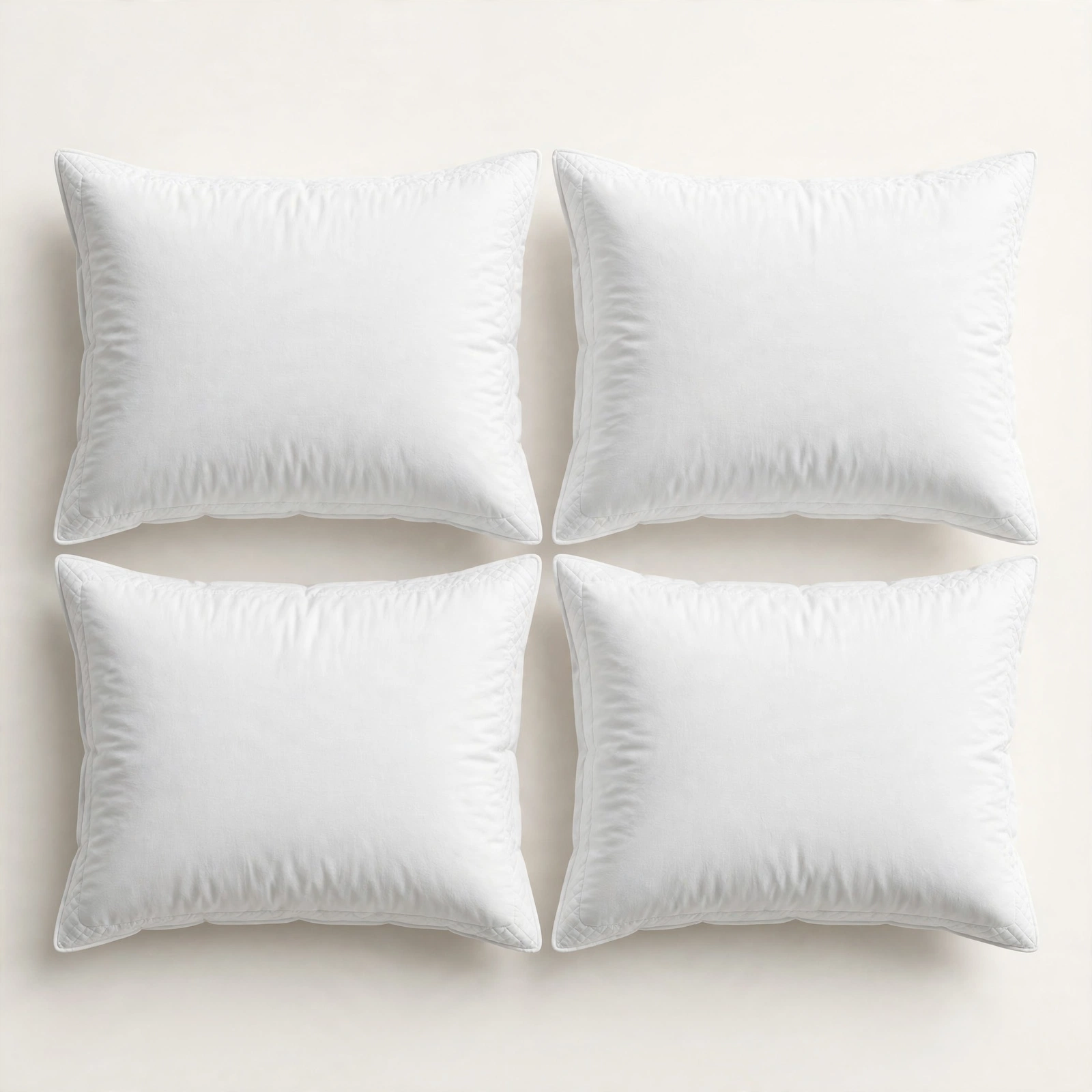
If you are buying several pillows at once, the Hollowfibre Multipack (four pillows, guide price £39.99) and the pillow multipacks make it easier to rotate pillows through the wash. Our Pillow Care Guide collects the essentials in one place.
Frequently asked questions
Can you put pillows in the tumble dryer?
Many can, if the care label allows. Synthetic pillows such as hollowfibre and microfibre are usually the easiest. Feather and down need more care, and memory foam should not go in a dryer at all.
What temperature should I tumble dry a pillow at?
Use the lowest heat setting, or an air-only setting. High heat can damage the filling and the cover.
How long does a pillow take to dry?
It varies with the filling, the dryer and how much water is left in it. Synthetic pillows dry faster than natural ones, and feather and down can take several cycles. Check for damp rather than relying on a set time.
Why do you put tennis balls in the dryer with pillows?
Dryer balls or clean tennis balls help break up clumps in the filling as they tumble, which speeds drying and helps the pillow keep its shape. Put them in clean socks if you want to avoid marks.
Can I tumble dry a pillow without washing it first?
A short, low-heat tumble with dryer balls can freshen and plump a pillow, but it will not clean it. Follow the care label.
Can I dry a pillow on a radiator?
We would not. High, uneven heat can damage the filling and leave the centre damp. Use an airer in a warm, ventilated room instead.
How do I know if my pillow is dry inside?
Squeeze the centre and corners, check for cool or heavy spots and smell it. If any part feels damp, keep drying.
How often should I wash and dry my pillows?
It depends on the pillow and the care label. Our washing guide has a section on how often to wash.
The bottom line
Tumble drying a pillow is safe for many synthetic types and possible for some natural ones, provided you read the care label, keep the heat low, give the pillow space and dry it all the way through. When in doubt, air dry it, and always check the centre before the pillow goes back on the bed. A little patience at this stage keeps a pillow fresher and more comfortable for much longer.
Need a fresh set? Browse the Pillow Store collection.